
Home & Equipment Assessment
Supporting safety, accessibility, and independence at home
A Home & Equipment Assessment evaluates how an individual’s functional abilities interact with their home environment and the equipment they use in everyday activities.
Benchmark Occupational Therapy provides individualized assessments to identify environmental barriers, equipment needs, and practical strategies that may improve safety, accessibility, and independence following injury, illness, or a change in functional status.
Home Assessment
A home assessment examines whether the physical environment supports the individual’s current functional abilities and daily activities.
Depending on the referral question, assessment may include:
Access to and from the home
Stairs, ramps, and entrances
Mobility within the home
Bathroom accessibility
Bedroom setup
Kitchen access and use
Transfers
Furniture height and positioning
Laundry facilities
Flooring and potential environmental barriers
Access to commonly used household areas
Space available for mobility aids or other equipment
The assessment considers both the physical environment and how the individual actually performs activities within that environment.
Equipment Assessment
Adaptive equipment can sometimes reduce the physical demands of an activity, improve safety, or allow an individual to complete a task with less assistance.
Equipment needs are assessed based on the individual’s functional presentation, usual activities, home environment, and demonstrated abilities.
Recommendations may include:
Bathing and showering equipment
Toilet equipment
Grab bars and transfer supports
Mobility aids
Transfer equipment
Reachers and long-handled aids
Dressing and grooming equipment
Adaptive kitchen equipment
Seating or positioning equipment
Bed-related equipment
Pressure-management or comfort-related equipment
Other adaptive devices relevant to daily activities
Whenever appropriate, the occupational therapist considers whether existing equipment can be adjusted or used differently before recommending additional equipment.
Functional Assessment in the Home
Equipment and environmental recommendations are most useful when considered in relation to actual functional performance.
Assessment may therefore include observation or demonstration of relevant activities such as:
Entering or leaving the home
Negotiating stairs
Walking through the home
Getting in and out of bed
Toilet transfers
Bath or shower transfers
Kitchen activities
Accessing household storage
Using mobility aids
Completing other activities relevant to the referral
This allows recommendations to be based on the individual’s demonstrated abilities and the specific demands of their environment.
Bathroom Safety and Accessibility
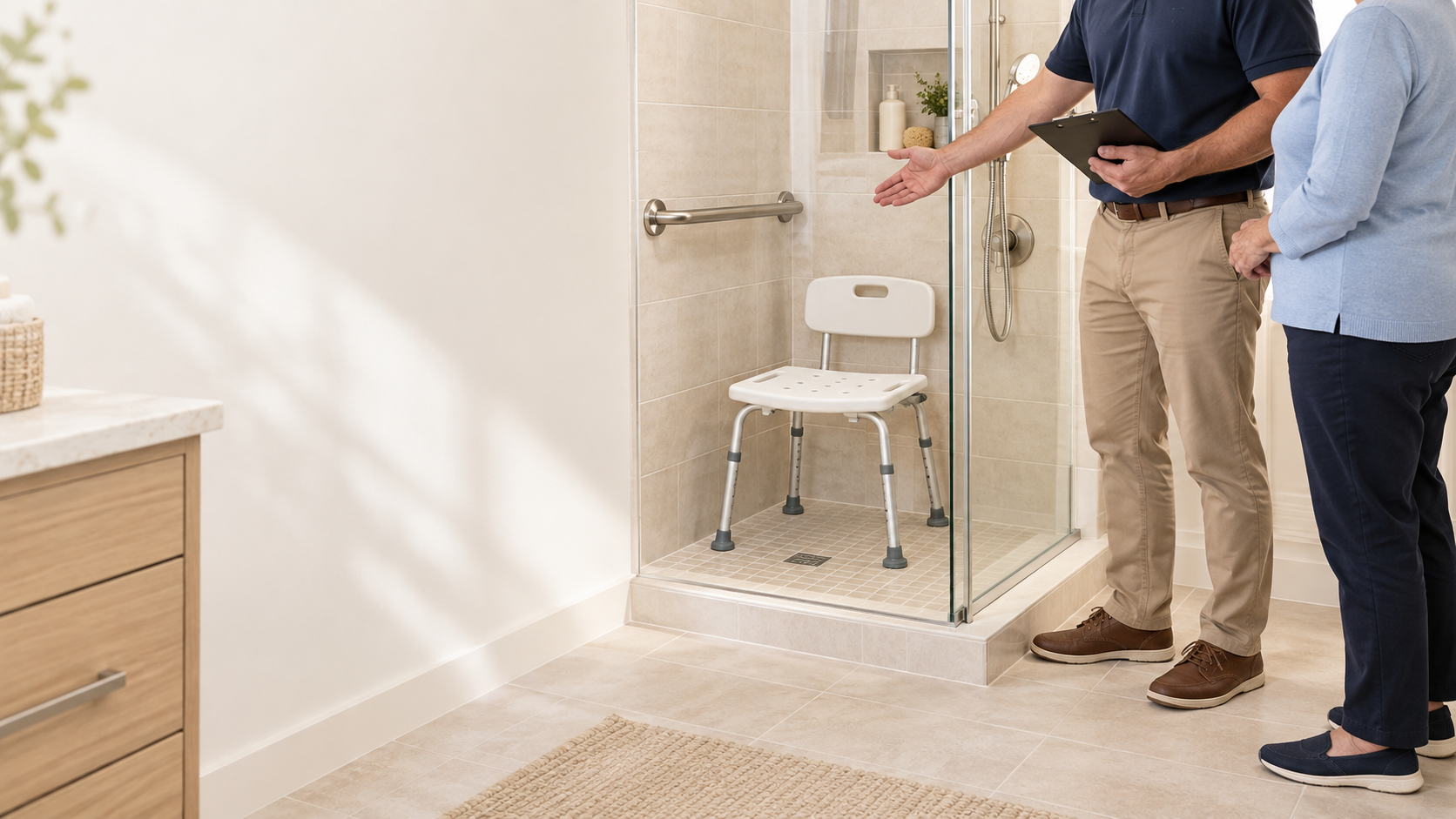
Bathrooms are a common focus of home and equipment assessments because bathing, showering, and toileting may involve transfers, confined spaces, wet surfaces, and changes in position.
Assessment may consider:
Toilet height and transfer method
Bathtub or shower access
Need for seating during bathing
Grab-bar placement
Transfer equipment
Shower controls and handheld shower equipment
Available space for mobility aids
Ability to safely enter, exit, and move within the bathroom
Recommendations are individualized to the person and the configuration of the bathroom rather than based on a standard equipment package.
Home Access and Mobility
Assessment may also address barriers affecting entry to the home or mobility between different areas of the residence.
This may include consideration of:
Exterior steps
Railings
Ramps
Thresholds
Doorways
Interior stairs
Walking surfaces
Space for walkers or wheelchairs
Furniture placement
Access to essential areas of the home
Where modifications are being considered, occupational therapy recommendations can help identify the functional requirements that should be addressed.
Equipment Trials and Vendor Coordination
When appropriate, equipment may be trialed before a final recommendation is made.
A trial can help determine whether the equipment:
Fits the individual appropriately
Can be used safely
Works within the available space
Improves functional performance
Can be operated independently or with available assistance
Addresses the identified functional need
Benchmark Occupational Therapy may also coordinate with equipment vendors or other service providers when additional product information, fitting, installation, or specialized expertise is required.
Who May Request a Home & Equipment Assessment?
Home and equipment assessments may be requested by:
Automobile insurers
Disability insurers
Case managers
Rehabilitation professionals
Legal representatives
Individuals and families
Other organizations requiring an assessment of home safety, accessibility, or equipment needs