
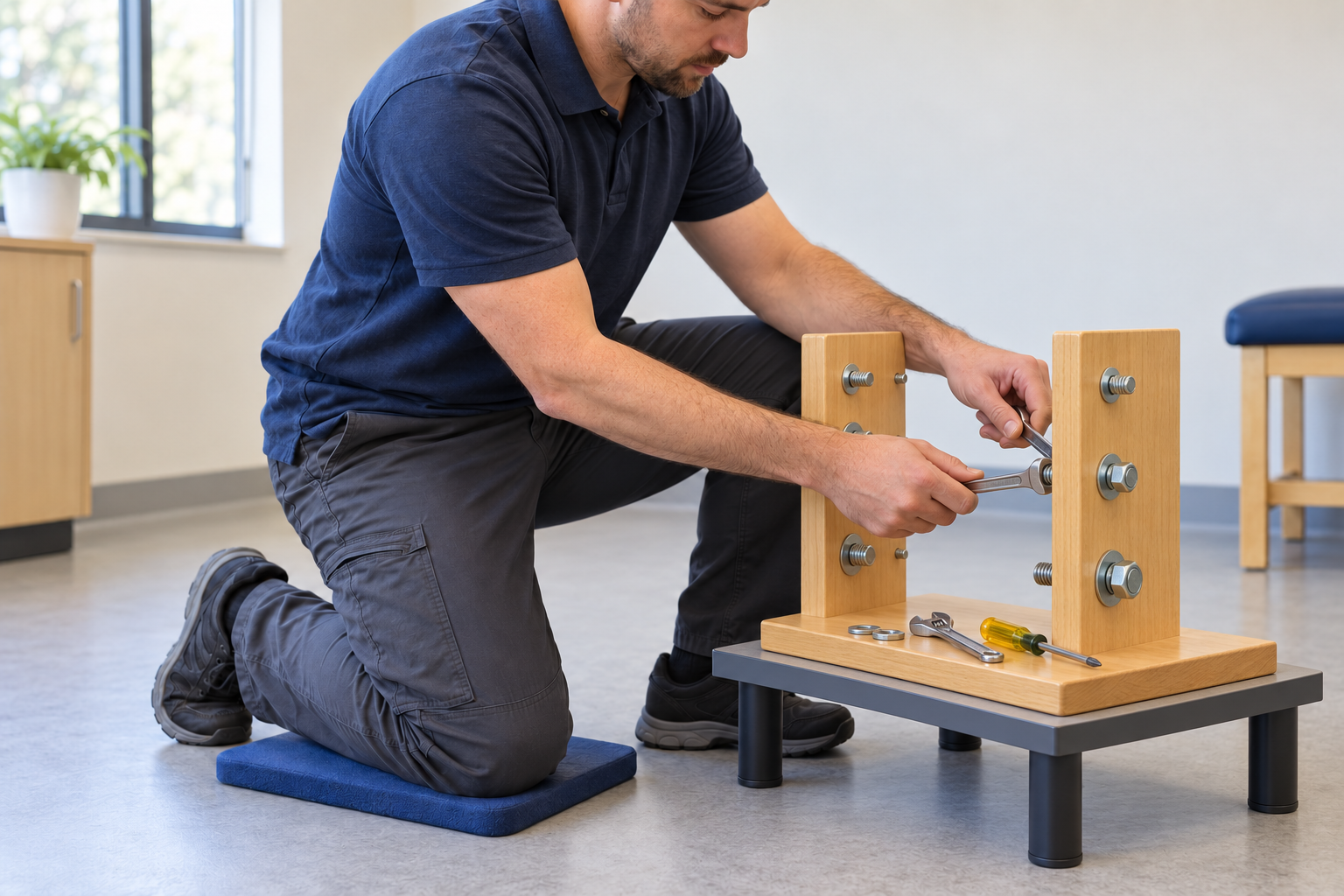
Physical Functional Capacity Evaluation
About the Assessment
A Physical Functional Capacity Evaluation (FCE) is a structured occupational therapy assessment designed to evaluate an individual's physical abilities, functional tolerances, and performance in relation to work and everyday activities.
The assessment incorporates standardized testing, functional activities, and clinical observations to examine areas such as strength, endurance, mobility, material handling, positional tolerances, and the ability to perform work-related tasks. Consideration is also given to reported symptoms, consistency of performance, and the individual's response to physical activity.
Benchmark Occupational Therapy provides Physical Functional Capacity Evaluations in Winnipeg, Manitoba. Assessment findings are integrated with available medical information and relevant job demands to provide a comprehensive understanding of demonstrated functional abilities, limitations, and potential implications for return-to-work planning, workplace accommodations, and rehabilitation.
When May an FCE Be Appropriate?
Clarifying current physical work abilities and tolerances
Supporting return-to-work or rehabilitation planning
Comparing functional abilities with known job demands
Identifying potential barriers to work participation
Assisting with accommodation or graduated return-to-work planning
Providing updated functional information when work capacity is unclear
What the Assessment May Include
Assessment components are selected according to the individual, the purpose of the assessment, and the functional demands being evaluated.
Material Handling
Lifting, carrying, pushing, pulling, and related work activities.
Positional Tolerances
Sitting, standing, walking, bending, kneeling, crouching, reaching, and other sustained or repeated postures.
Mobility & Physical Function
Walking, stairs, transfers, balance, movement quality, and other relevant mobility demands.
Strength & Endurance
Physical effort, repetition, sustained activity, and tolerance for work-related tasks.
Work Simulation
Representative work activities may be incorporated when appropriate to the occupation and assessment purpose.
Reporting & Recommendations
Following the assessment, findings are summarized in a detailed occupational therapy report describing the individual’s demonstrated functional abilities and tolerances in relation to the demands being evaluated.
Reporting may address observed performance, functional strengths and limitations, consistency of performance, relevant work tolerances, comparison with available occupational demands, and factors that may affect safe and sustainable work participation.
Recommendations are provided as appropriate and may address rehabilitation planning, graduated return-to-work, workplace accommodation, task modification, further assessment, or other strategies intended to support functional participation.
Frequently Asked Questions
What is the difference between a one-day and two-day FCE?
A one-day FCE provides an assessment of physical abilities and functional performance within a single assessment session.
A two-day FCE allows for additional assessment and observation of performance across consecutive days, including potential changes in symptoms, activity tolerance, and functional abilities following the first day of testing.
The appropriate assessment format depends on the referral questions, the individual's presentation, and the information required to support decision-making.
How is an FCE used in return-to-work planning?
An FCE can provide objective information regarding an individual's demonstrated physical abilities and functional tolerances in relation to workplace demands.
When information about the physical requirements of a job is available, assessment findings may be compared with those demands to identify potential functional limitations, areas requiring accommodation, or considerations for a graduated return-to-work plan.
An FCE contributes to return-to-work planning but does not independently determine medical clearance or overall fitness for employment.
What is the difference between an FCE and a Job Demands Analysis (JDA)?
A Functional Capacity Evaluation assesses the individual's demonstrated functional abilities and tolerances.
A Job Demands Analysis examines the physical, cognitive, and environmental requirements of a particular job, including the frequency, duration, and intensity of essential work activities.
When used together, these assessments can help determine how an individual's demonstrated abilities compare with the demands of a specific position and identify potential accommodation or return-to-work considerations.
Does an FCE determine whether someone is able to work?
An FCE provides information about an individual's demonstrated physical abilities and limitations under the conditions of the assessment.
Findings may help identify whether specific job demands appear consistent with demonstrated functional performance. However, an FCE represents one component of a broader decision-making process and should be considered alongside medical information, job requirements, and other relevant factors.
Who can refer someone for a Physical FCE?
Physical Functional Capacity Evaluations may be requested by insurers, disability case managers, employers, rehabilitation professionals, legal representatives, and other parties involved in functional assessment or return-to-work planning.
Benchmark Occupational Therapy provides independent Physical Functional Capacity Evaluations in Winnipeg, Manitoba. Referral inquiries are welcome to discuss the assessment objectives, available information, and appropriate evaluation format.